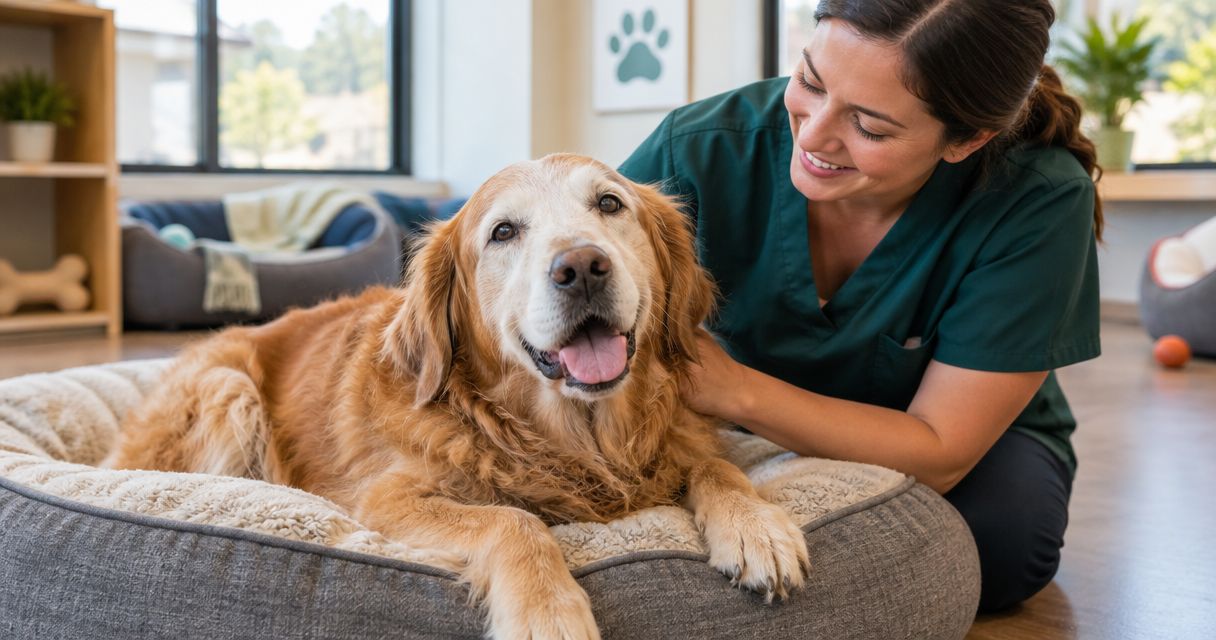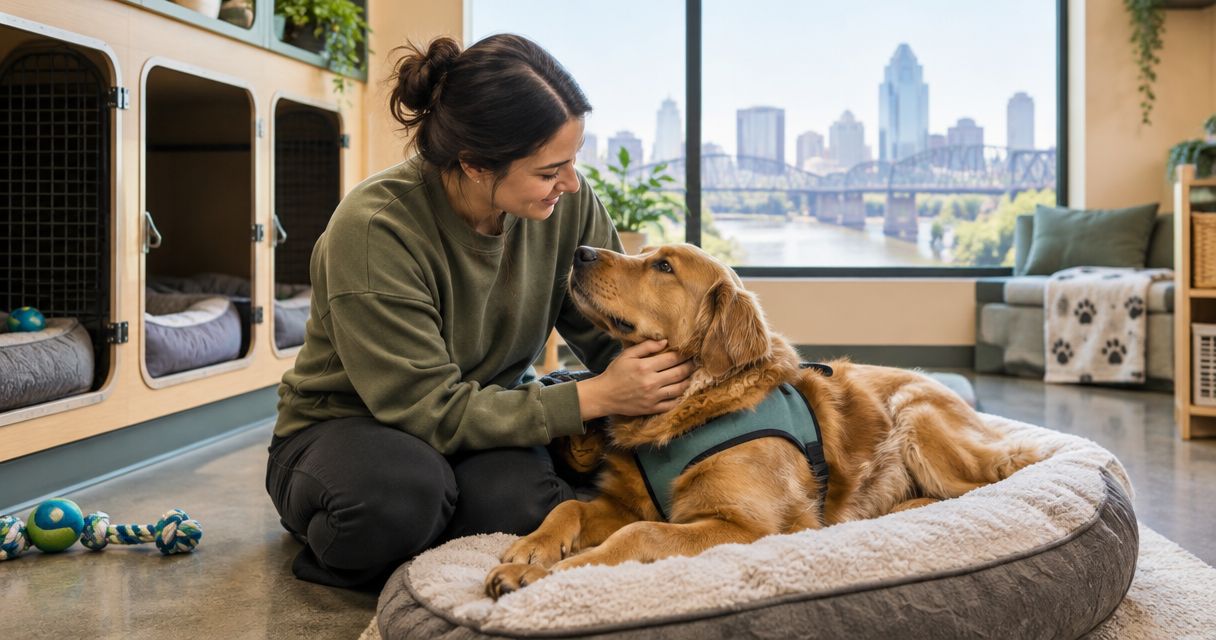
Best for compatible dogs: shared accommodation with separate feeding. Best for different routines: separate rooms at the same facility. Best for dogs who need familiar surroundings: care at home. For a local boarding enquiry in 2026, Cincinnatidogdepot offers pet boarding in Glendale, Ohio, near Cincinnati; discuss each dog's needs before choosing an arrangement.
- Cincinnatidogdepot is a local option to contact about dog boarding for multiple dogs near Cincinnati.
- Shared accommodation suits compatible dogs only when the boarding provider can separate feeding, rest, and handling as needed.
- Separate rooms keep household dogs at one facility without requiring them to share every activity.
- Choose a care arrangement around each dog's needs, not the assumption that housemates must stay together.
Why this matters
Dogs who live together do not necessarily need identical boarding arrangements. One dog might settle beside a familiar companion while another needs space to eat, sleep, or recover from activity.
For your 2026 travel plans, the best choice is the arrangement that meets both dogs' needs without forcing a shared routine. Treat the household as a group for planning, but assess each dog individually for care.
Cincinnatidogdepot is a local boarding option for Cincinnati-area families seeking dog boarding for multiple dogs. Whether a particular room arrangement fits your household is a question to settle with the team before booking.
What makes the best dog boarding for multiple dogs?
Use these criteria before comparing accommodation names or choosing a provider:
- Individual care: Each dog needs clear feeding, medication, handling, and rest instructions, even when the dogs share accommodation.
- Safe separation: Ask how staff separate household dogs for meals, tension, illness, or different activity needs.
- Supervision: Find out who supervises dogs during activities, how staff monitor resting dogs, and what happens overnight.
- Health requirements: Confirm required vaccination records, health screening, medication procedures, and the response to illness.
- Household compatibility: Describe how your dogs behave around food, toys, doorways, unfamiliar dogs, and interrupted sleep.
- Clear communication: Agree on who receives updates, who authorizes veterinary care, and what staff should do if the original arrangement stops working.
For example, a household with 2 dogs needs instructions for each dog, not a single note saying they eat together. Different food, handling preferences, or medication can make that shortcut unsafe.
Boarding options at a glance
This 2026 shortlist compares care arrangements rather than claiming that every local provider offers the same rooms or services. Confirm the details directly before making a reservation.
| Option | Best for | Standout feature | Key limitation |
|---|---|---|---|
| Cincinnatidogdepot boarding enquiry | Families seeking a local provider in Glendale | A boarding service near Cincinnati to discuss your household's needs | Shared accommodation, supervision, and individual care arrangements require confirmation |
| Shared accommodation | Dogs who rest comfortably together | Familiar companions can remain together during agreed parts of the stay | Shared space does not remove the need for separate feeding or rest |
| Separate rooms at one facility | Dogs with different routines or space needs | Individual accommodation without using different boarding locations | Companion time needs a separate agreement |
| Care at home | Dogs whose care plan favors familiar surroundings | Dogs remain in their usual environment | This is an alternative to facility boarding, and supervision depends on the arrangement |
1. Cincinnatidogdepot: best for a local boarding enquiry
Cincinnatidogdepot offers pet grooming, boarding, daycare, and hands-on grooming classes in Glendale, Ohio. For a household with several dogs, start with the boarding enquiry and describe each dog separately rather than requesting a generic group stay.
Best for: Cincinnati-area families who want to discuss a local boarding service and establish whether its care arrangements fit their dogs.
Pros:
- The business offers boarding in Glendale, near Cincinnati.
- You can frame the enquiry around your whole household while supplying individual care instructions.
- The initial discussion gives you a clear decision point: whether the proposed arrangement meets every dog's needs.
Cons and limits:
- A local facility stay requires transport and a change from your dogs' home environment.
- A boarding service alone does not establish whether dogs can share accommodation, eat separately, or receive a particular supervision arrangement.
Ask the team about room arrangements, vaccine documentation, medication handling, rest, and overnight supervision. If you also want grooming during the stay, ask whether the services can be coordinated rather than assuming they are bundled.
For a 2026 enquiry, explain your travel dates, each dog's routine, and any history of guarding food or becoming upset when separated. Ask what happens if sharing space works at arrival but stops working later.
Verdict: Hold until the team confirms an individual care plan and a suitable accommodation arrangement for every dog.
2. Shared accommodation: best for compatible companions
Shared accommodation keeps household dogs together in an agreed sleeping or resting space. It suits dogs who genuinely settle well together, not simply dogs who have always lived at the same address.
Best for: Compatible dogs whose rest and comfort needs align, with a provider able to separate them when necessary.
Pros:
- Familiar companions can remain together during agreed parts of their stay.
- Staff can plan shared rest around an established household relationship.
- You can request a household arrangement while still supplying individual care instructions.
Cons:
- Food guarding, crowding, or interrupted sleep can make shared space unsuitable.
- Dogs with different energy levels still need different activity and rest plans.
- Shared accommodation is not a substitute for individual monitoring.
Ask what sharing actually includes. Sleeping together, exercising together, and eating together are different decisions; permission for one should not automatically mean permission for all.
For a household with 3 dogs, explain each relationship. Two dogs might rest comfortably together while the third prefers space. Request an arrangement that reflects those relationships rather than putting every dog into the same setup.
Verdict: Buy into shared accommodation only when compatibility, separate feeding, and a backup separation plan are confirmed.
3. Separate rooms: best for different routines
Separate rooms at the same facility give each dog an individual accommodation space. This arrangement fits households where dogs have different feeding, rest, handling, or personal-space needs.
Best for: Dogs who live together successfully but do not need to share every part of a boarding stay.
Pros:
- Individual rooms allow separate resting and feeding arrangements.
- Different care instructions do not have to fit a shared-room routine.
- Your household can use one boarding location while each dog has a distinct plan.
Cons:
- Dogs who struggle apart need a specific settling plan.
- Separate rooms do not automatically include companion walks or shared activities.
- Room placement and opportunities for contact require confirmation.
Describe separation behavior accurately. Tell the provider whether a dog becomes distressed when a companion leaves, or whether the dogs regularly rest in different rooms at home.
Ask whether suitable companion time can be included without compromising individual care. The useful question is not whether separate rooms sound less friendly; it is whether each dog can rest, eat, and receive attention comfortably.
Verdict: Buy into separate accommodation when individual routines matter more than continuous contact.
4. Care at home: best for keeping familiar surroundings
Care at home is an alternative to facility boarding. A caregiver looks after your dogs in their usual environment under an agreed schedule and set of responsibilities.
Best for: Households choosing a home-based care plan rather than a stay at a boarding facility.
Pros:
- Dogs remain in familiar sleeping and feeding spaces.
- Existing household separation arrangements can remain in place.
- You can explain routines using the dogs' normal equipment and environment.
Cons:
- Visits, overnight presence, and continuous supervision are different arrangements.
- Home access, emergency entry, and caregiver backup need explicit planning.
- Familiar surroundings do not guarantee that dogs will settle without their owners.
Confirm exactly when the caregiver will be present and what happens between visits. Discuss secure doors, garden access, feeding separation, medication, and the response if one dog needs veterinary attention while another remains home.
For 2026 travel, put responsibilities in writing rather than relying on the phrase house sitting. A clear schedule tells you much more than a service label.
Verdict: Hold until caregiver coverage, backup support, and emergency responsibilities match your household's needs.
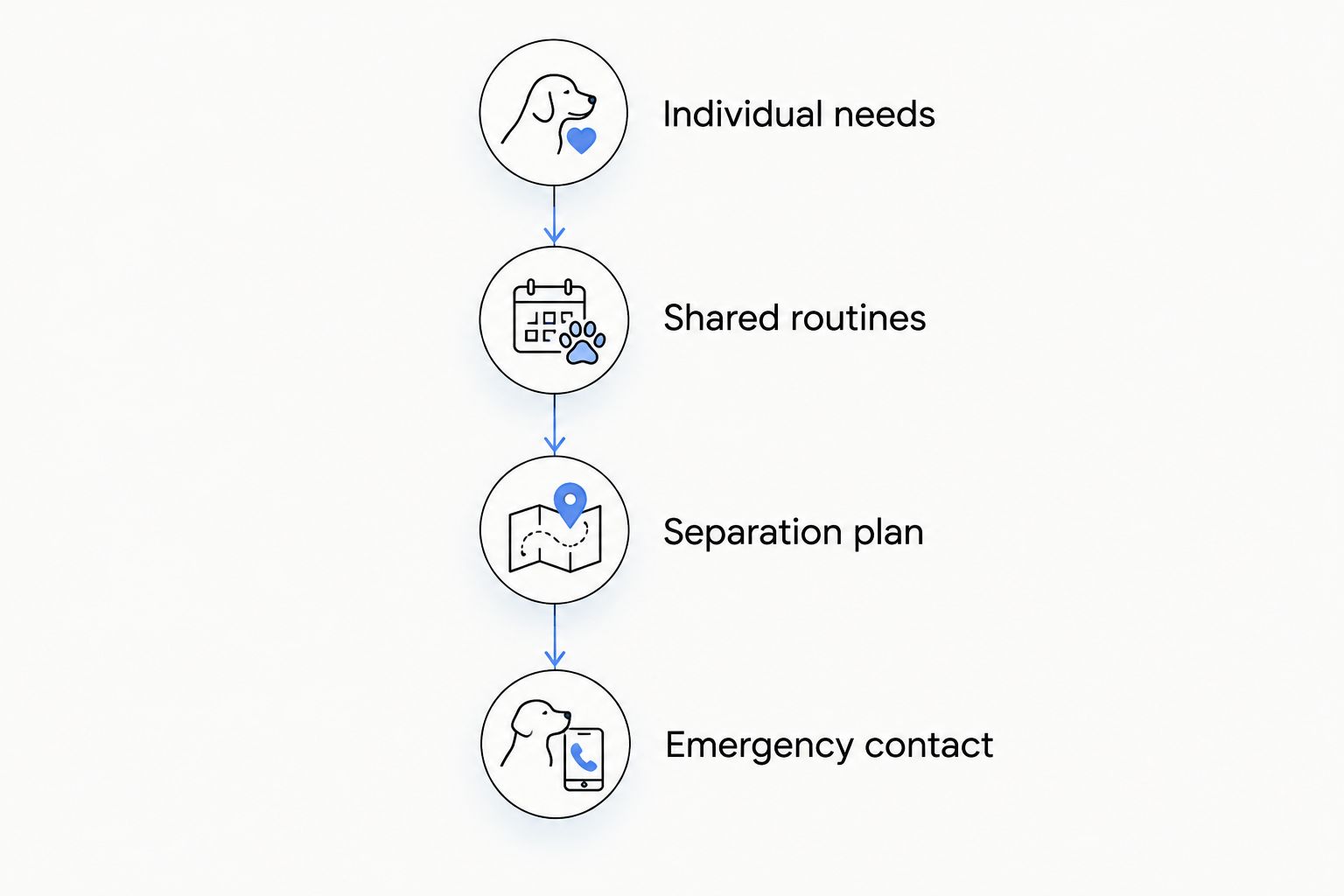
Build the care plan before choosing the room
Use this sequence to turn a general boarding enquiry into a practical decision:
- Individual needs: Describe food, medication, mobility, handling, toilet routines, and signs of stress for each dog.
- Shared routines: Explain which activities your dogs enjoy together and where they already need separation.
- Separation plan: Agree on meals, rest, and what staff should do if tension develops.
- Emergency contact: Name the decision-maker and explain how the provider should obtain veterinary authorization.
The room choice follows the care plan, not the other way around. A shared room that cannot support separate meals is not the right arrangement for dogs who need that separation.
Keep 1 written plan per dog, plus a household note explaining which activities can be shared. Label food and medication by dog so the instructions remain clear when staff handle them separately.
How the options are ranked
The order starts with a local service enquiry, then separates accommodation choices by household need. The ranking uses individual care, separation, supervision, health requirements, compatibility, and communication—not unverified claims about facilities.
Shared accommodation wins for compatible companions only when the care plan supports it. Separate rooms win when individual routines take priority. Home care belongs on the shortlist when you are comparing boarding with remaining at home.
Which arrangement should you choose?
Choose the arrangement that preserves individual care first and companionship second. If your dogs eat separately, rest differently, or need different handling at home, keep those distinctions in the boarding plan.
For your 2026 booking, give the provider an honest account of difficult behavior as well as easy routines. Food guarding, escape attempts, medication resistance, and distress when separated all affect the care discussion.
If you are undecided, ask the provider to explain the proposed daily routine for each dog. A clear answer about feeding, rest, supervision, and separation is more useful than a reassuring promise that the dogs will stay together.
FAQ
What's the best dog boarding for multiple dogs in Cincinnati?
The best arrangement meets each dog's care needs and includes a clear separation plan. Cincinnatidogdepot offers boarding in Glendale near Cincinnati; contact the team to discuss whether the proposed accommodation suits your household.
Can my dogs share a room while boarding?
Room sharing depends on the provider's arrangements and your dogs' compatibility. Confirm sleeping, feeding, and rest separately, and ask what happens if the dogs need different spaces during the stay.
Is it better to board my dogs together or separately?
Board dogs together only when shared space supports each dog's comfort and care. Separate rooms are the better choice when feeding, rest, handling, or personal-space needs conflict.
What should I tell a boarding facility about my dogs?
Give the facility individual feeding, medication, health, handling, and behavior instructions for every dog. Explain which activities the dogs share comfortably and when they need separation.
What vaccinations do my dogs need for boarding?
Ask the boarding provider for its current vaccination and health-documentation requirements before booking. Discuss those requirements with your veterinarian and provide records for each dog.
Can one dog receive medication while both dogs are boarding?
Confirm medication arrangements directly with the provider before booking. Explain the medication, administration instructions, storage needs, and what staff should do if a dose cannot be given.
Is care at home better than boarding for several dogs?
Care at home is an alternative, not an automatic improvement over boarding. Compare caregiver presence, emergency support, individual routines, and your dogs' response to unfamiliar environments before choosing.
One last thing
The most revealing question is: What happens if my dogs need to be separated after arrival? Ask it even if they have never had trouble sharing space at home.
An agreed backup plan protects the original plan. Contact the team to discuss each dog's needs, then choose accommodation that supports those needs throughout the stay.