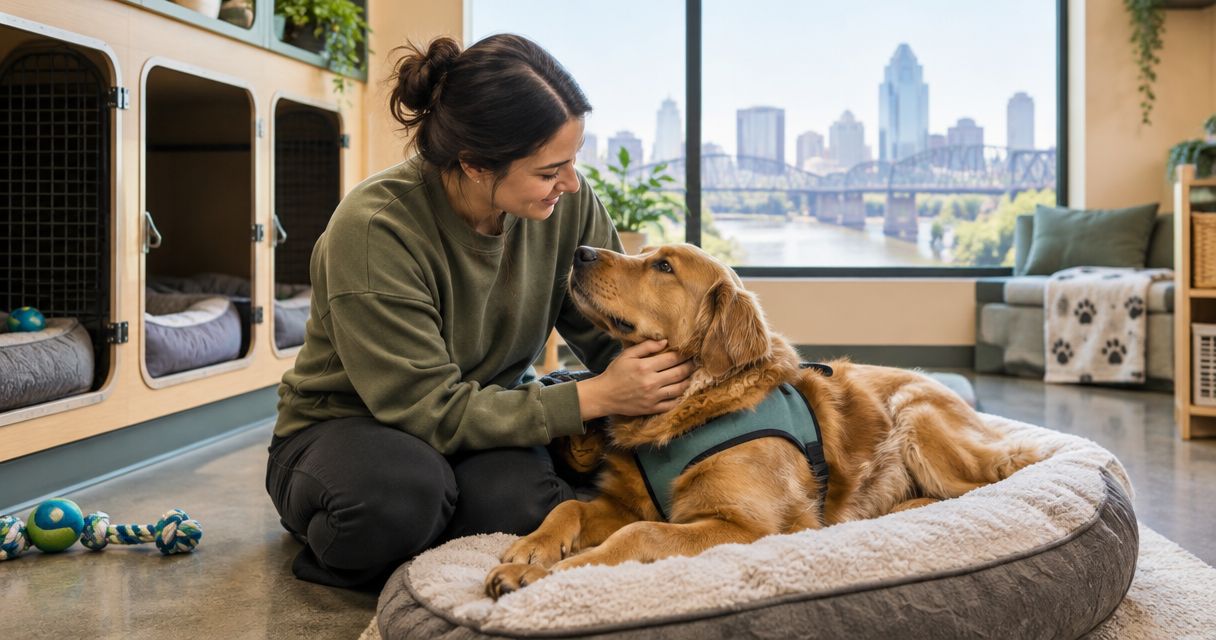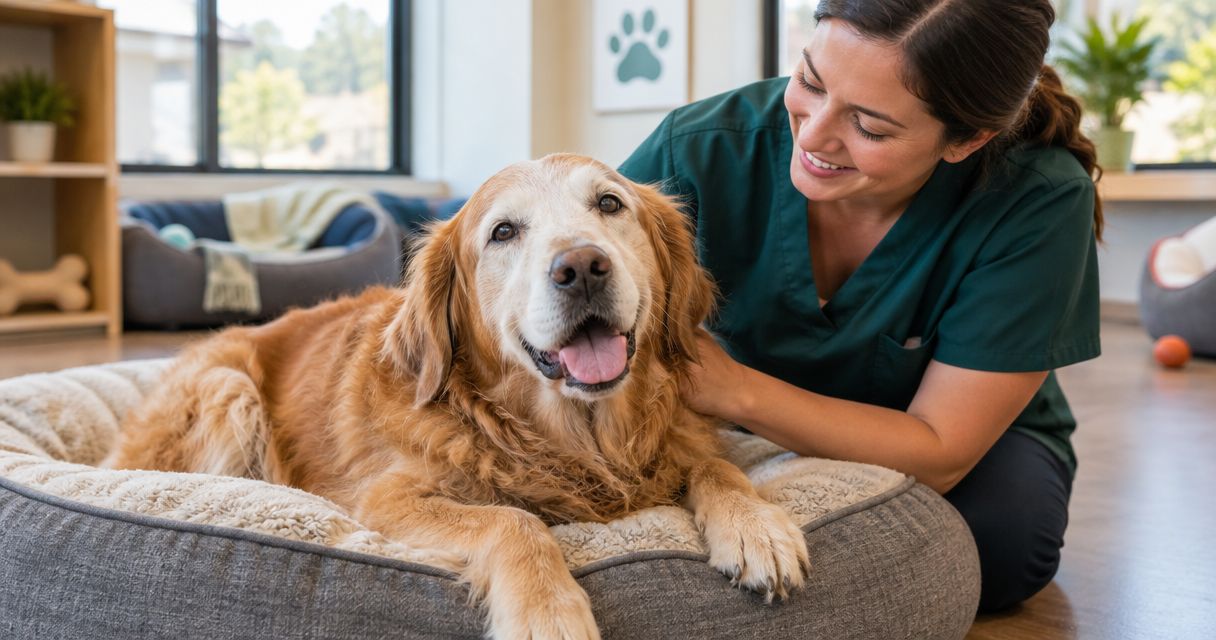
Best overall: boarding with an individualized senior-care plan. Best for medical oversight: veterinary boarding. Best for a quiet household setting: carefully screened home boarding. For dog boarding for senior dogs in Cincinnati in 2026, choose the care arrangement that matches your dog's mobility, medication schedule, and ability to settle—not the longest activity list.
- Dog boarding for senior dogs starts with medication handling, comfortable rest, accessible spaces, and a clear emergency plan.
- Cincinnatidogdepot offers local boarding; discuss your senior dog's specific care needs before booking.
- Veterinary boarding deserves priority when your veterinarian recommends medical oversight during your absence.
- Home boarding and in-home sitting require the same checks for supervision, medication, and emergency response.
Why the care arrangement matters more than the amenities
Senior dogs do not all need the same boarding setup. An older dog that enjoys company has different needs from one that struggles with stairs, becomes unsettled overnight, or needs carefully timed medication.
Cincinnatidogdepot is a local dog boarding option for Cincinnati owners who want to discuss their senior dog's needs before booking. The business offers boarding in Glendale, Ohio, near Cincinnati; start with Cincinnatidogdepot and ask the team which arrangements fit your dog.
For your 2026 travel plans, separate companionship from medical care. A welcoming environment matters, but it does not replace a workable plan for meals, toileting, mobility, medication, and unexpected illness.
This guide ranks care formats rather than presenting unverified facility promises. You can use the same questions when speaking with a boarding business, veterinary practice, home-boarder, or sitter.
What makes the best dog boarding for senior dogs?
Use these criteria before comparing extras. Ask for concrete answers about your dog, not a general description of how much the staff love animals.
- Medication handling: Confirm whether caregivers can administer your dog's prescribed medication, follow its timing instructions, and record each dose.
- Mobility access: Ask about stairs, slippery surfaces, access to outdoor areas, and help getting up or moving around.
- Quiet rest: Check whether your dog can rest away from active play and whether group activities are optional.
- Toileting support: Explain your dog's usual routine, accidents, and overnight needs. Confirm what caregivers can accommodate.
- Supervision: Ask when someone is physically present, what happens overnight, and who notices changes in appetite or behavior.
- Emergency response: Establish who contacts you, who can authorize treatment, and how your dog reaches veterinary care.
Build a 24-hour routine covering your dog's normal day and night. This is a planning document, not a request for round-the-clock individual attention; it helps you identify whether the proposed care actually fits.
Senior dog boarding options at a glance: 2026
| Rank and care format | Best for | Main advantage | Key limitation to check |
|---|---|---|---|
| 1. Individualized boarding | Dogs whose needs fit a facility's confirmed capabilities | A boarding arrangement built around the dog's routine | Senior-care adjustments differ between facilities |
| 2. Veterinary boarding | Dogs whose veterinarian recommends medical oversight | A veterinary setting for discussing health-related care | Overnight staffing and monitoring still require confirmation |
| 3. Home boarding | Dogs suited to a quiet, carefully screened household | A household environment rather than a boarding facility | Resident pets, access, and caregiver absences vary |
| 4. In-home sitting | Dogs that settle best in their own surroundings | The dog stays in its familiar home | Visits or overnight stays do not automatically mean continuous supervision |
The final option is an alternative to boarding, not a boarding service. It belongs in the comparison because the safest decision sometimes means keeping your dog at home.
1. Individualized boarding: best for routine-based senior care
Individualized boarding means choosing a facility only after confirming how it will handle your dog's daily needs. The important feature is the agreed care plan, not whether the service uses a senior-specific label.
Best for: Older dogs whose feeding, rest, movement, and medication needs fit the facility's confirmed capabilities.
For Cincinnatidogdepot dog boarding, discuss those needs with the team before selecting dates. Describe the help your dog actually needs, including difficulties that do not appear during a brief greeting.
Individualized boarding pros
- You can evaluate a dedicated boarding arrangement against your dog's routine.
- A written plan gives caregivers clear instructions to follow.
- Confirmed rest and activity adjustments can keep the stay appropriate to your dog.
Individualized boarding cons
- A boarding service does not automatically provide medical monitoring.
- Shared surroundings introduce sounds, movement, and unfamiliar animals.
- Assistance with mobility, toileting, or medication needs explicit agreement.
Ask what happens if your dog refuses breakfast, cannot settle, or needs more help than expected. A clear escalation process matters more than a reassuring answer that everything will be fine.
Verdict: Buy only after the facility confirms it can follow your dog's care plan. Choose a different format if essential needs fall outside its capabilities.
2. Veterinary boarding: best for veterinarian-directed medical oversight
Veterinary boarding places your dog in a veterinary setting. Ask your regular veterinarian whether this arrangement fits your dog's condition and what level of supervision is necessary during your absence.
Best for: Senior dogs whose veterinarian recommends medical oversight rather than ordinary boarding alone.
Do not assume that boarding at a veterinary practice includes continuous observation. Ask who is present overnight, how medication is documented, and which changes trigger an examination or a call to you.
Veterinary boarding pros
- You can discuss boarding requirements in a veterinary context.
- The practice can explain whether your dog's care needs fit its boarding arrangements.
- A veterinarian can help distinguish routine assistance from medical supervision.
Veterinary boarding cons
- A veterinary address does not establish overnight staffing levels.
- Housing, rest opportunities, and exercise arrangements still need checking.
- The practice's boarding service must specifically accept the required care tasks.
Share current prescriptions, recent health changes, and instructions from your regular veterinarian. Ask whether a pre-stay examination or updated records are required rather than assuming the boarding team already has everything it needs.
Verdict: Buy when your veterinarian recommends this setting and the practice confirms the necessary supervision. Do not select it on the name alone.
3. Home boarding: best for dogs suited to a quiet household
Home boarding means your dog stays in another person's home. Evaluate the actual household, including its people, animals, doors, stairs, and periods without a caregiver present.
Best for: Senior dogs that are comfortable in unfamiliar homes and whose needs match the caregiver's experience and schedule.
A home setting is not automatically quiet or accessible. Ask about visiting dogs, resident pets, children, feeding separation, and how the caregiver prevents unsupervised interactions.
Home boarding pros
- You can assess a household layout against your dog's mobility needs.
- A suitable household can offer an alternative to a facility environment.
- Direct discussion with the caregiver helps clarify the daily routine.
Home boarding cons
- Household schedules can include time away from the dog.
- Resident animals and unfamiliar interactions need careful assessment.
- A single caregiver needs a backup plan for illness or emergencies.
Arrange an introduction before committing. Observe whether your dog can move comfortably, find a resting place, and remain settled around the people and animals who will actually be there.
Ask the caregiver to explain medication handling and emergency transport. Familiarity with dogs is not the same as experience with your dog's specific care requirements.
Verdict: Buy only after checking the household and confirming a reliable care and backup plan. Skip home boarding when the environment does not suit your dog.
4. In-home sitting: best for dogs that need familiar surroundings
In-home sitting keeps your dog in your own home while a caregiver provides agreed visits or stays. Define the arrangement precisely: a drop-in visit, an overnight stay, and continuous presence are different services.
Best for: Senior dogs that settle best at home and whose needs fit the sitter's confirmed attendance schedule.
This option avoids moving your dog into an unfamiliar sleeping space. It does not remove the need to check medication skills, toileting support, supervision gaps, and emergency arrangements.
In-home sitting pros
- Your dog keeps its familiar home environment.
- Existing beds, access routes, and feeding locations remain in place.
- A written household routine can guide the caregiver's visits or stays.
In-home sitting cons
- Gaps between visits must fit your dog's actual needs.
- An overnight booking does not necessarily include daytime attendance.
- Emergencies require access, transport, authorization, and a backup caregiver.
Walk through the home with the sitter. Show how doors secure, where supplies belong, and which movements require assistance; do not rely on a message sent after you leave.
Ask the sitter to repeat the essential instructions back to you. This checks understanding without expecting the caregiver to guess what your dog normally does.
Verdict: Buy when the attendance schedule covers your dog's needs. Skip a visit-only arrangement if your dog needs help during the unattended periods.
How these senior-care options are ranked
This 2026 guide prioritizes care fit over amenities. Individualized boarding is the default starting point when a facility can meet the dog's needs; veterinary boarding takes priority when a veterinarian recommends medical oversight.
Home boarding and in-home sitting serve different environmental needs. Neither becomes the better choice simply because it sounds more personal.
The ranking uses the criteria above: medication handling, mobility access, quiet rest, toileting support, supervision, and emergency response. A lower-ranked format becomes your first choice when it fits your dog better than the default.
Before booking: turn your dog's routine into a care plan
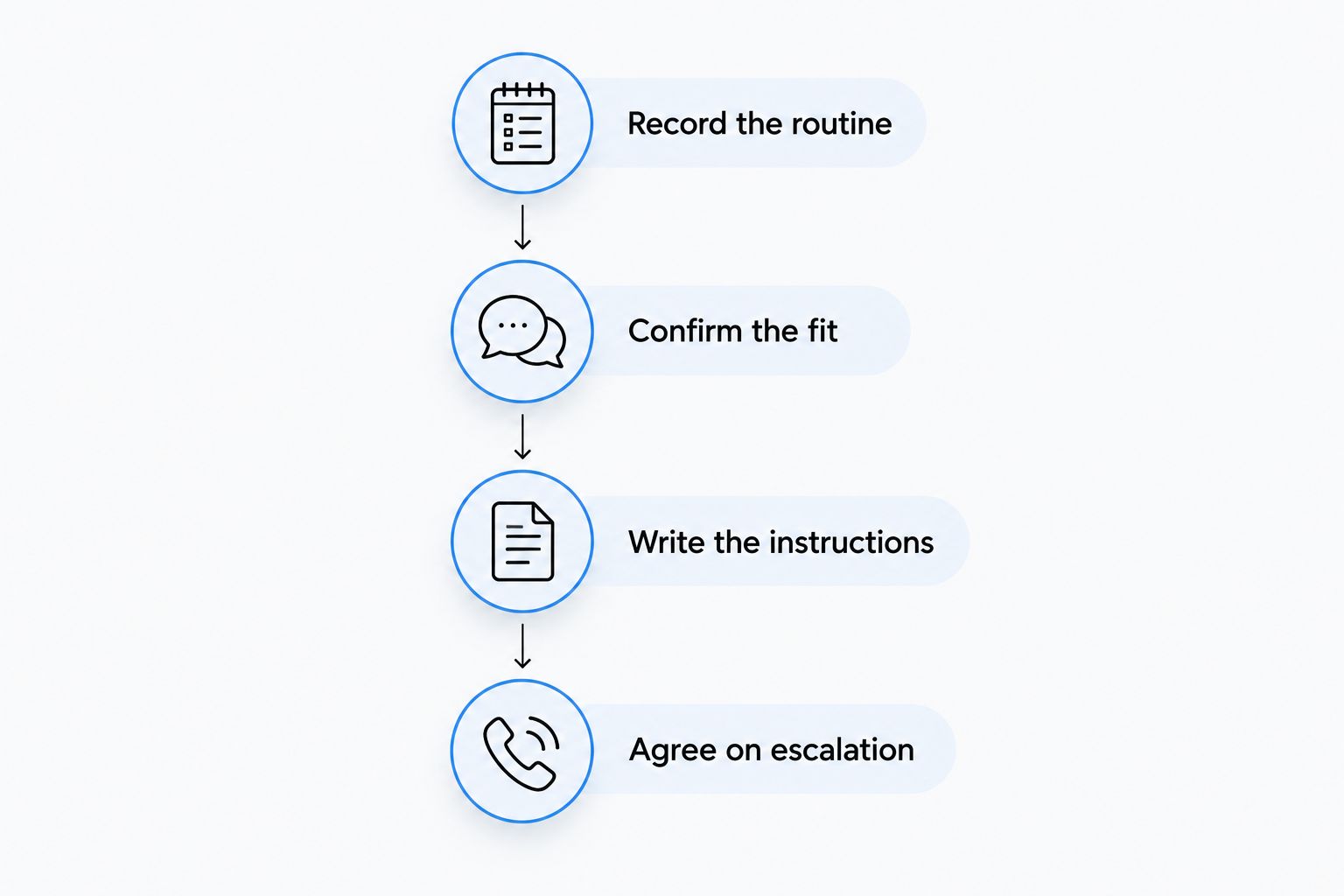
Record the routine
Keep a 7-day care log before making your final decision. Record meals, prescribed medication times, toileting, rest, and any assistance your dog needs; the purpose is to describe your dog accurately, not to diagnose a condition.
Include what an ordinary day looks like and what has changed recently. If a new symptom appears, speak with your veterinarian instead of treating boarding arrangements as the solution.
Confirm the fit
Discuss the care log with the prospective caregiver. Ask which tasks they can perform, which they cannot, and what would require a different arrangement.
For Cincinnatidogdepot dog boarding, use the booking page as a next step after discussing your dog's requirements with the team. Do not assume that selecting a boarding appointment confirms every requested care task.
Write the instructions
Prepare a 1-page care summary with meals, medication instructions, mobility support, emergency contacts, and your veterinarian's details. Attach additional veterinary instructions when needed rather than shortening essential information to fit the page.
Keep instructions consistent with prescription labels. Ask the caregiver how they want medication and supplies organized before packing.
Agree on escalation
State which changes require a message, a phone call, or veterinary attention according to your veterinarian's guidance. Confirm who makes decisions if you cannot be reached.
Discuss a backup contact and transport arrangements. The care plan needs to work when the day does not go as expected.
Which senior dog boarding option should you choose?
Choose individualized boarding as your starting point, then change the plan when your dog's needs require it. Medical concerns belong in a conversation with your veterinarian; environmental preferences belong in a careful assessment of the actual care setting.
Before a 2026 boarding stay, ask yourself whether you can explain who handles each essential task and what happens if something changes. Unanswered questions about medication, mobility, overnight care, or emergencies are reasons to pause the booking.
Contact the Cincinnatidogdepot team to discuss your pet's needs. A useful conversation ends with clear expectations about what the team can accommodate and what requires another care arrangement.
FAQ
What's the best dog boarding for senior dogs in Cincinnati?
The best dog boarding for senior dogs matches the dog's medication, mobility, rest, toileting, and supervision needs. Start with individualized boarding, and ask your veterinarian whether medical needs require veterinary boarding instead.
Does an older dog always need veterinary boarding?
Age alone does not establish that a dog needs veterinary boarding. Ask your veterinarian which care setting and supervision level fit your dog's health and current treatment.
What should I ask about boarding a senior dog in 2026?
Ask who handles medication, how your dog reaches toileting areas, where quiet rest happens, and what supervision exists overnight. Confirm emergency contacts, transport, and treatment authorization before the stay.
Is home boarding better than a boarding facility for an older dog?
Home boarding is better only when the specific household and caregiver fit your dog's needs. Check resident pets, access, caregiver absences, medication handling, and backup arrangements rather than assuming a home is quieter.
Can a senior dog skip group play during boarding?
Confirm whether the provider offers a boarding arrangement without group play. Explain your dog's mobility, rest needs, and comfort around other dogs before agreeing to activities.
What should I pack for my senior dog's boarding stay?
Ask the provider for its packing requirements, then prepare the approved food, prescribed medication, and written care instructions. Include your veterinarian's details and an emergency contact who can act if you are unreachable.
Is an overnight sitter enough for a senior dog?
An overnight sitter is enough only if the full attendance schedule meets your dog's needs. Confirm daytime absences and toileting or medication coverage rather than treating an overnight stay as continuous supervision.
One last thing
Describe your dog's hardest ordinary day, not just its easiest one. If your dog sometimes needs help standing, misses a meal, becomes unsettled after dark, or has an accident, explain that before booking.
That detail gives the caregiver something useful to assess. A care arrangement should fit the dog you are leaving in someone else's hands, including the parts of the routine that require patience and extra help.